
Fitted Wardrobes: Built-In, Sliding or Freestanding? A Guide to Bespoke Bedroom Storage
Fitted wardrobes are one of the most requested carpentry jobs we do across Waltham Abbey, Cheshunt, Enfield, Chingford, Loughton and North and East London, and one of the most misunderstood. Homeowners often assume fitted means expensive flat-pack, or that it is only for large bedrooms. In fact a well-made fitted wardrobe is a piece of bespoke joinery built to your room, and it comes into its own in the awkward spaces that ready-made furniture cannot handle. This guide explains the options, how a bespoke wardrobe is built, and what to look for when comparing quotes.
Built-in, sliding or freestanding?
Freestanding wardrobes
Bought ready-made and placed against the wall. Cheapest and quickest, and you can take them with you when you move. The drawbacks: a gap above and to each side that collects dust and wastes space, shallow depth that crushes coats, and no way to deal with alcoves, chimney breasts, sloping ceilings or skirting boards.
Built-in fitted wardrobes with hinged doors
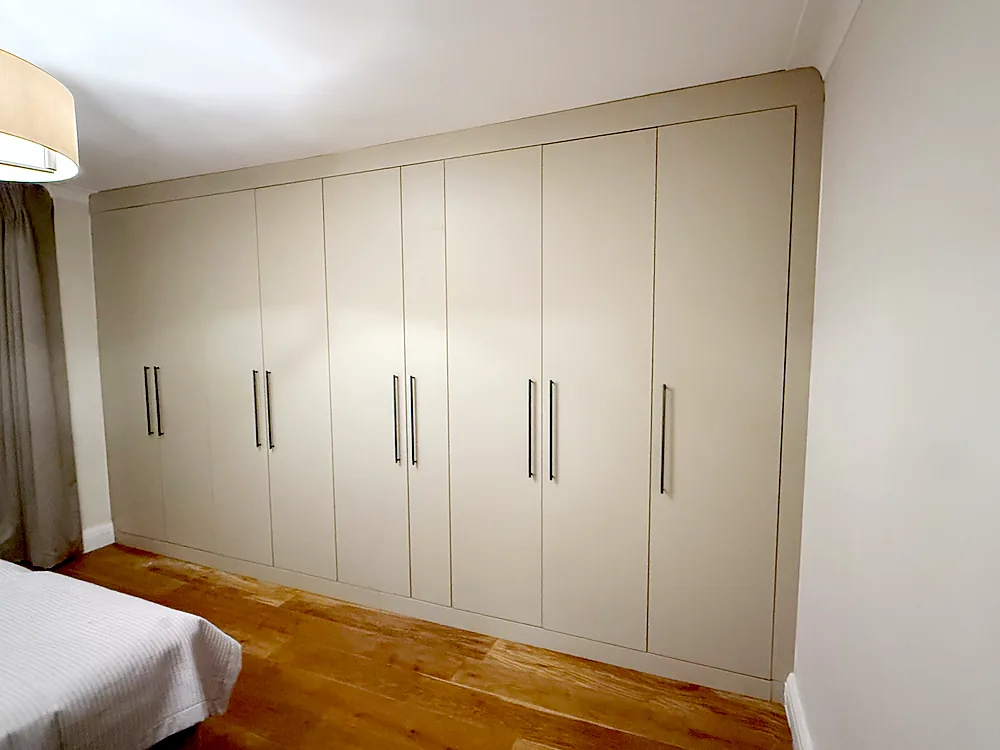
Built on site to fill the space exactly, floor to ceiling and wall to wall. Hinged doors give full access to the interior and suit traditional and shaker-style rooms. This is the option most of our clients choose for alcoves either side of a chimney breast, for a full wall of storage in a master bedroom, and for loft conversions where the eaves would otherwise be dead space.
Sliding-door fitted wardrobes
Same built-in carcass, but with doors that slide on a track instead of swinging out. Best where there is no room for a door to open, for example a narrow bedroom with the bed close to the wardrobe. Mirrored sliding doors make a small room feel larger. The trade-off is that you can only see half the wardrobe at once and the track needs a level floor.
Where fitted wardrobes make the biggest difference
- Alcoves beside a chimney breast in Victorian and 1930s houses, which are rarely a standard width.
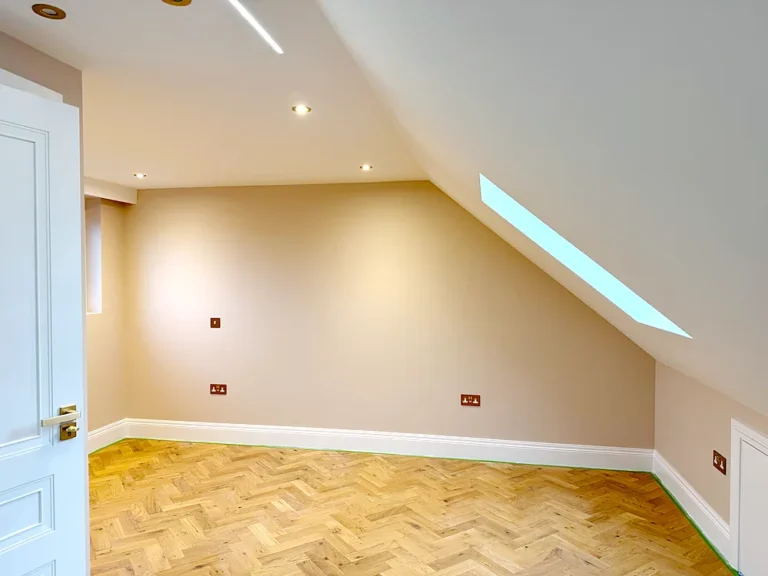
- Loft conversions, where wardrobes built into the eaves turn sloping, unusable space into storage.
- Box rooms and children’s bedrooms, where a floor-to-ceiling unit frees up floor area.
- Bedrooms with a bay window, sloping ceiling or uneven walls.
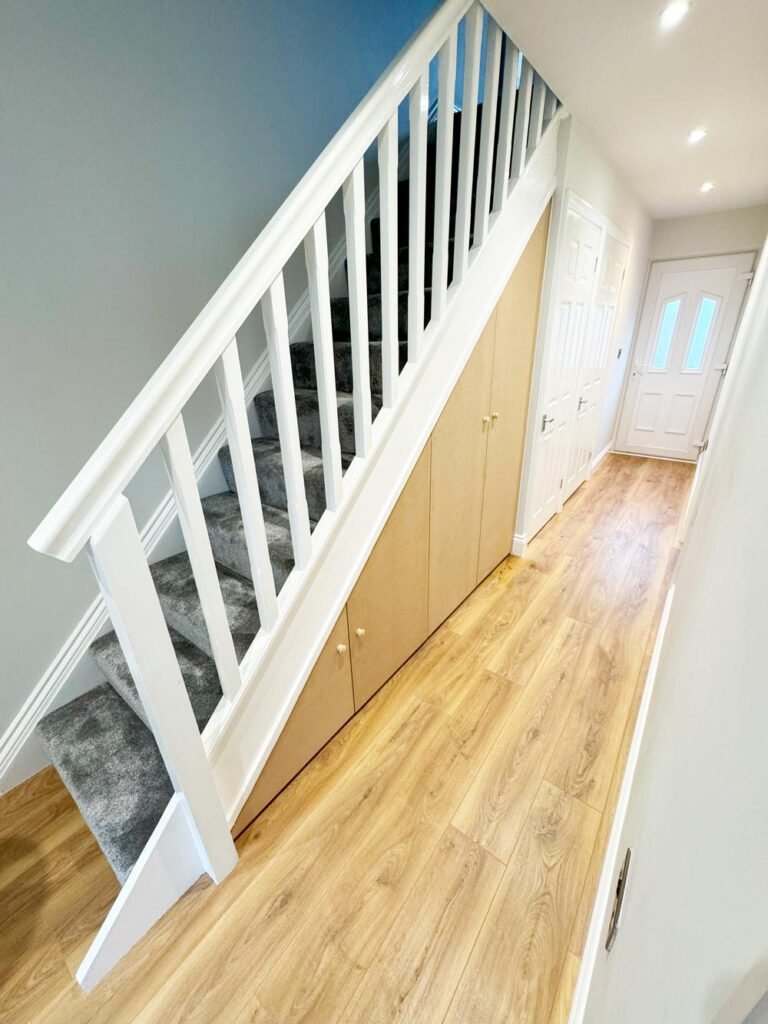
- Under-stairs cupboards, landings and hallways for coats, shoes and hoovers.
- Combined wardrobe and dressing table, or wardrobe and media wall in a bedroom or lounge.
How a bespoke fitted wardrobe is built
1. Survey and design
We measure the room at several heights, because walls in older houses are rarely square, and note the position of sockets, radiators, windows and light switches. We agree the layout with you: how much hanging space, at what heights, how many shelves and drawers, whether you want lighting, and the door style and finish.
2. Carcass
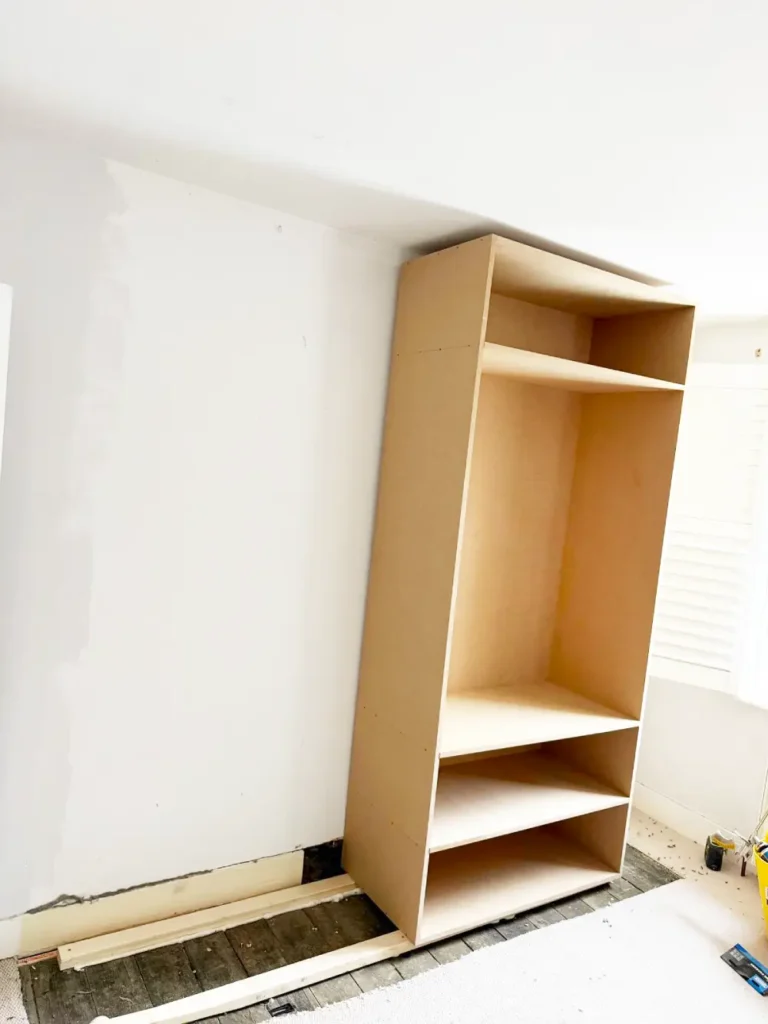
The structure is built from moisture-resistant MDF, normally 18 millimetre for the carcass and shelves, cut to the exact shape of the room and scribed to the walls, floor and ceiling so there are no gaps. Solid fixings go into the wall behind. The skirting board is cut back so the unit sits flat against the wall.
3. Interior fit-out
Hanging rails at single and double height, adjustable shelves, drawer boxes on soft-close runners, shoe racks, pull-out trouser rails and internal LED strips are fitted to suit what you actually store. This is where a bespoke wardrobe beats anything off the shelf.
4. Doors
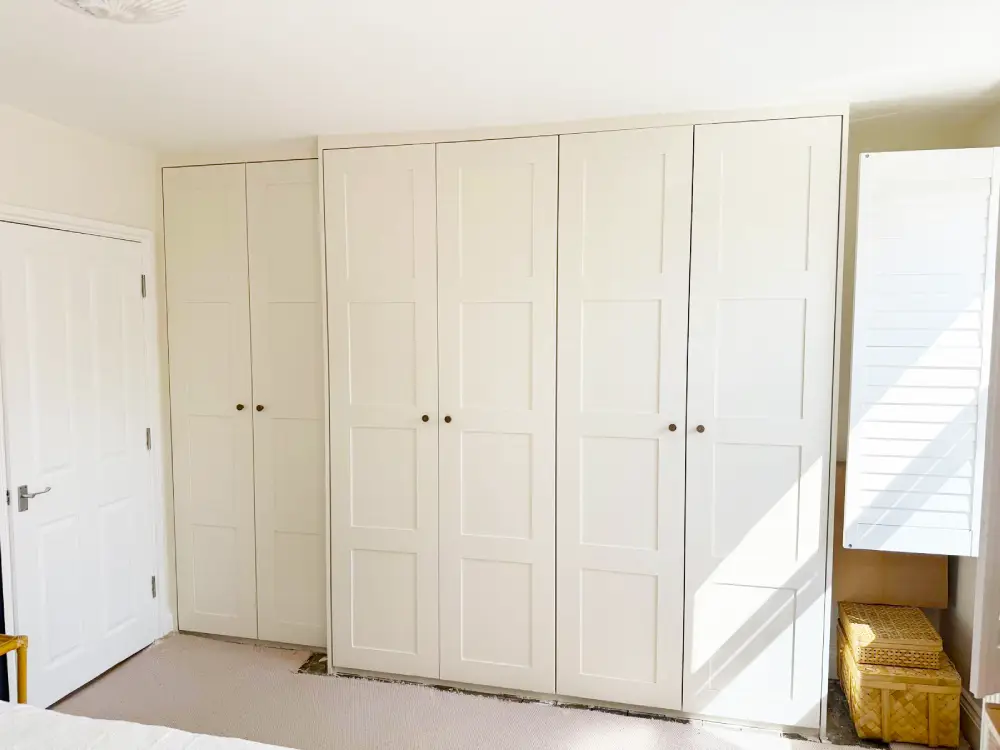
Doors are made and hung on concealed soft-close hinges, with the gaps set even all round. Popular styles are shaker (a flat panel with a raised frame), plain flat doors for a modern look, V-groove or fluted panels, and mirrored or glass inserts.

5. Finishing
The whole unit is filled, sanded and painted. A sprayed finish gives the smoothest result; a hand-painted finish in an eggshell suits period houses. Handles or push-to-open catches go on last. Some clients choose a pre-finished veneer or laminate instead of paint for a wood-effect look.
How long does it take?
A single alcove wardrobe usually takes two to three days on site. A full wall of wardrobes with drawers and lighting takes four to six days including painting. Spray-finished doors are sometimes made in the workshop and brought to site, which shortens the time in your bedroom. We tell you the days you will be without the room before we start.
Choosing the finish
- Painted MDF: the most popular. Any colour, matches the room, easy to touch up.
- Wood veneer: real oak, walnut or ash faces on an MDF or plywood core, for a natural look.
- Laminate or melamine: hard-wearing and lower cost, with a smaller range of colours and textures.
- Mirror or glass inserts: brighten a small room and are useful on sliding doors.
- Mixing finishes: for example painted doors with an oak interior or oak open shelving at the side.
What to check when comparing quotes
- Carcass material and thickness: 18 millimetre moisture-resistant MDF is the standard for a wardrobe that will not sag or bow.
- Whether the unit is scribed to the walls and ceiling, or just boxed in with cover strips.
- Hinges and runners: soft-close as standard, and a named brand you can get spares for.
- Interior spec: how many rails, shelves and drawers are included, and whether lighting is included.
- Finish: sprayed or hand-painted, how many coats, and whether painting is in the quote at all.
- Making good: cutting and refitting skirting, filling, and decorating the surrounding wall.
- Fixed price and dates in writing.

Beyond the bedroom
The same joinery skills build under-stairs storage, media walls, alcove shelving, home office desks and window seats. Because they are made to the room they often solve a problem that no shop-bought furniture can. Our carpentry and joinery page covers the full range, and the gallery shows recent wardrobes, panelling and storage we have built.
Want wardrobes that fit your room exactly?
Our carpenters design and build fitted wardrobes, sliding wardrobes, alcove units, under-stairs storage and media walls across Waltham Abbey, Cheshunt, Enfield, Chingford, Loughton, Epping and North and East London, painted and finished by our own team. Call +44 20 3150 0510, email contact@adiorconstruction.co.uk or send us a message for a free design visit and a fixed written quote.
Frequently asked questions
Are fitted wardrobes worth it?
Yes in most bedrooms. They use the full height and width of the space, deal with alcoves and sloping ceilings, and are built to the exact interior layout you need. They also stay with the house and are attractive to buyers.
What are fitted wardrobes made of?
Most bespoke fitted wardrobes are built from 18 millimetre moisture-resistant MDF, then painted or sprayed. Veneered and laminate finishes are also available for a wood-effect look.
How long does it take to fit wardrobes?
A single alcove wardrobe takes two to three days. A full wall of wardrobes with drawers and lighting takes four to six days including painting.
Sliding or hinged wardrobe doors: which is better?
Hinged doors give full access to the interior and suit traditional rooms. Sliding doors suit narrow rooms where there is no space for a door to swing, and mirrored sliding doors make a small bedroom feel bigger.
Can you build wardrobes into the eaves of a loft conversion?
Yes. Wardrobes built into the sloping eaves are one of the best uses of a loft conversion, turning space that would otherwise be wasted into hanging and drawer storage.
Do fitted wardrobes need planning permission or Building Regulations?
No. Fitted wardrobes are internal furniture and need neither, although if new lighting or sockets are added the electrical work must be carried out and certified correctly.