Skimming, Replastering or Dry Lining: Which Do Your Walls Actually Need?
When a wall looks tired, cracked or uneven, there are three ways to bring it back: skim over it, board over it, or take the old plaster off and start again. They cost and take very different amounts of time, and the right one depends on what is underneath. This guide explains how our plasterers decide which your walls need, drawing on jobs across Waltham Abbey, Cheshunt, Enfield, Chingford, Loughton, Epping and North and East London, and what happens on site.
The three options
Skimming
A skim is a thin coat of finishing plaster, usually 2 to 3 millimetres, applied over an existing wall or ceiling that is basically sound. It smooths out old paint, filler, small cracks and rough textures and leaves a new surface ready for paint. It is the quickest and most common job we do: a room can be skimmed in a day and painted within a week.
Dry lining and skimming
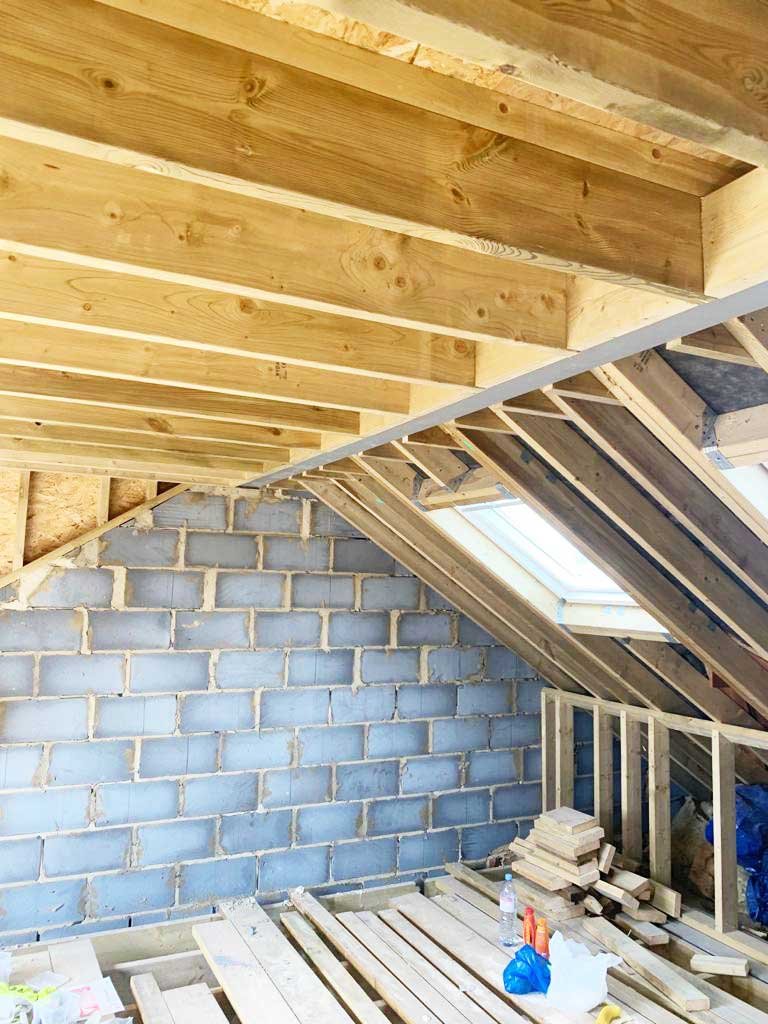
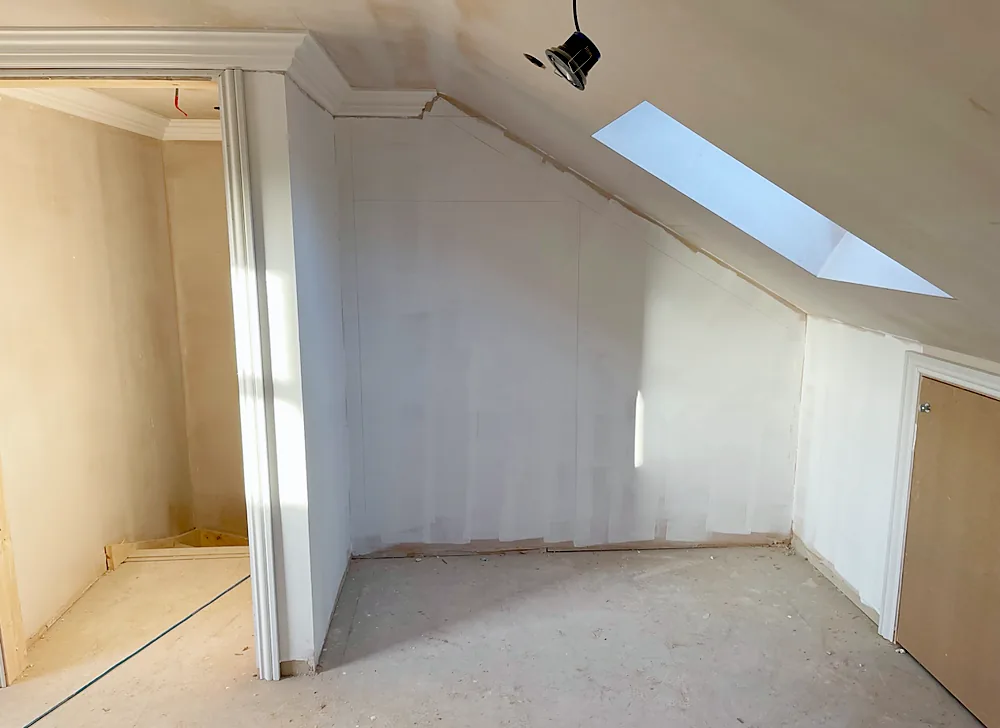
Plasterboard is fixed over the existing wall, either with dabs of adhesive straight onto the brick or blockwork, or on timber battens, and then skimmed. This is the answer where the old plaster is too far gone to skim but the wall behind is dry and solid, where the wall is badly out of true, or where you want to add insulation. It is also how every new wall and ceiling in a loft conversion or extension is finished.
Full replastering
The old plaster is hacked off back to the brick, a backing coat of bonding or hardwall is applied to bring the wall flat, and a finishing skim goes on top. This is the option for plaster that has come away from the wall over large areas, walls affected by damp that has now been fixed, and solid walls in older houses where a modern breathable finish is wanted. It is the messiest and slowest of the three but gives a completely new wall.

How to tell what your walls need
- Tap the wall with your knuckles. A hollow sound means the plaster has blown, that is come away from the brick. Small hollow patches can be cut out and patched; large areas need replastering or boarding.
- Hairline cracks that follow no pattern are usually surface cracks in old paint and filler, and a skim covers them. A crack that runs diagonally from the corner of a door or window, or one you can fit a coin into, needs looking at before any plastering.
- Brown or tide-mark staining means damp. The cause, whether a leaking gutter, a failed damp course or condensation, must be fixed first, then the affected plaster is removed and replaced.
- Crumbly or powdery plaster that comes off when you scrape it is past saving and needs replacing.
- Painted walls in good condition can be skimmed after a coat of bonding agent, which gives the new plaster something to grip.
- Old wallpaper and lining paper must come off. Skimming over paper is never a good idea, however well stuck it looks.
At the free survey we check every wall and ceiling this way and tell you room by room which option is needed. Sometimes a skim is enough. Sometimes one wall needs boarding and the rest can be skimmed, and the quote says exactly which.
Ceilings, Artex and asbestos
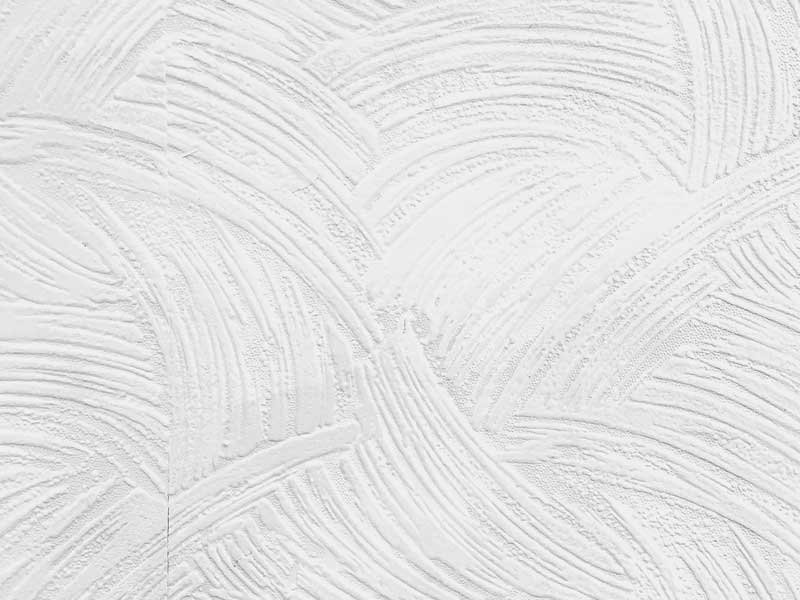
Ceilings follow the same logic, with one extra check. Artex and other textured coatings applied before 2000 can contain asbestos. We do not sand or scrape a textured ceiling until it has been tested, which takes a few days. If it is clear, older Artex is either skimmed over with a bonding coat first or removed. A ceiling with sagging plasterboard or old lath and plaster that has lost its key is best overboarded with new plasterboard and skimmed, which is faster and cleaner than pulling it down.
What happens on site
- Furniture is moved to the centre of the room or out of it, floors and everything left in the room are sheeted, and doorways are sealed with dust sheets.
- Any hacking off, wallpaper stripping or boarding is done first. Skips or bagged waste are included in the quote.
- Beading is fixed to external corners and around openings for crisp, straight edges.
- The backing coat goes on where needed and is left to firm up.
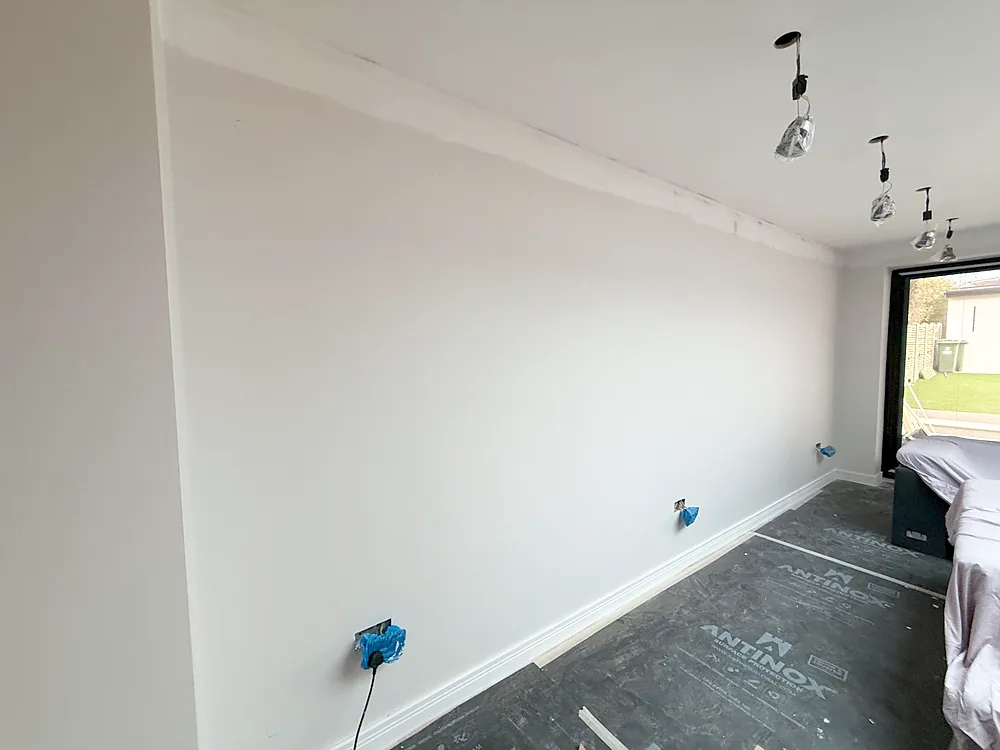
- The finishing skim is applied in two thin coats and trowelled up to a smooth, flat surface.
- Everything is cleared, sheets come up and the room is left ready for decorating.
Drying and painting new plaster
Fresh plaster turns from dark pink to a pale, even colour as it dries. A skim coat usually takes 5 to 7 days in a warm, ventilated room; a backing coat and full replaster can take two to three weeks. Do not point a heater at it, which cracks the surface. When it is dry, the first coat is a mist coat of watered-down matt emulsion, which soaks in and seals the plaster, followed by two top coats. Our decorators can follow straight on from the plasterers so you only deal with one team.
How long does each option take?
- Skimming a room: one day for the walls and ceiling of an average bedroom, plus drying time before painting.
- Dry lining and skimming a room: two to three days, depending on whether battens, insulation or ceiling boarding are involved.
- Full replastering of a room: three to four days including hacking off and the backing coat, plus longer drying.
- A whole house of skimming, as part of a renovation, is typically one to two weeks.
What to check on a plastering quote
- Which option the quote is for, wall by wall, and what the plasterer found that led to that decision.
- Whether sheeting, protection, waste removal and beading are included.
- Whether painted walls are being prepared with a bonding agent before skimming.
- Asbestos testing for textured ceilings.
- Whether decorating is included or quoted separately.
- Fixed price and dates in writing.
See the full list of what we do on our plastering and skimming page, and look through finished rooms in the gallery.
Need a wall or ceiling put right?
Our plasterers skim, board and replaster walls and ceilings, remove Artex and make good after damp and building work across Waltham Abbey, Cheshunt, Enfield, Chingford, Loughton, Epping and North and East London, and our decorators can follow straight on. Call +44 20 3150 0510, email contact@adiorconstruction.co.uk or send us a message for a free survey and a fixed written quote.
Frequently asked questions
What is the difference between skimming and plastering?
Skimming is a thin finishing coat of plaster, about 2 to 3 millimetres, applied over an existing sound wall or new plasterboard. Full plastering means removing the old plaster back to the brick and applying a backing coat and a finishing skim.
Can you skim over old plaster?
Yes, if it is sound, dry and firmly attached to the wall. Blown, crumbly or damp plaster must be removed first. Painted walls are coated with a bonding agent before skimming.
Can you skim over wallpaper?
No. Wallpaper and lining paper must be stripped and the wall prepared before skimming, otherwise the new plaster will fail with the paper.
How long does skimmed plaster take to dry?
Usually 5 to 7 days for a skim coat in a warm, ventilated room. A full replaster with a backing coat can take two to three weeks. It is dry when the colour is a pale, even pink.
What is dry lining?
Dry lining means fixing plasterboard over a wall, either with adhesive dabs or on battens, and then skimming it. It is used where old plaster is beyond skimming, where a wall is very uneven or where insulation is being added.
Can you skim over Artex?
Often yes, after testing for asbestos in coatings applied before 2000. Sound Artex is coated with a bonding agent and skimmed; heavily textured or damaged ceilings are overboarded or removed.