Composite or Timber Decking? Lifespan, Maintenance, Planning Rules and the Frame That Matters Most
Decking is the quickest way to turn a sloping, muddy or awkward garden into a usable outdoor room, and the first question every client asks is whether to go for timber or composite. Both can look superb and both can fail early if the structure underneath is wrong. This guide compares the two honestly, explains the substructure that matters more than the boards, and covers the planning rules that apply in Waltham Abbey, Cheshunt, Enfield, Chingford, Loughton, Epping and North and East London.
Timber decking
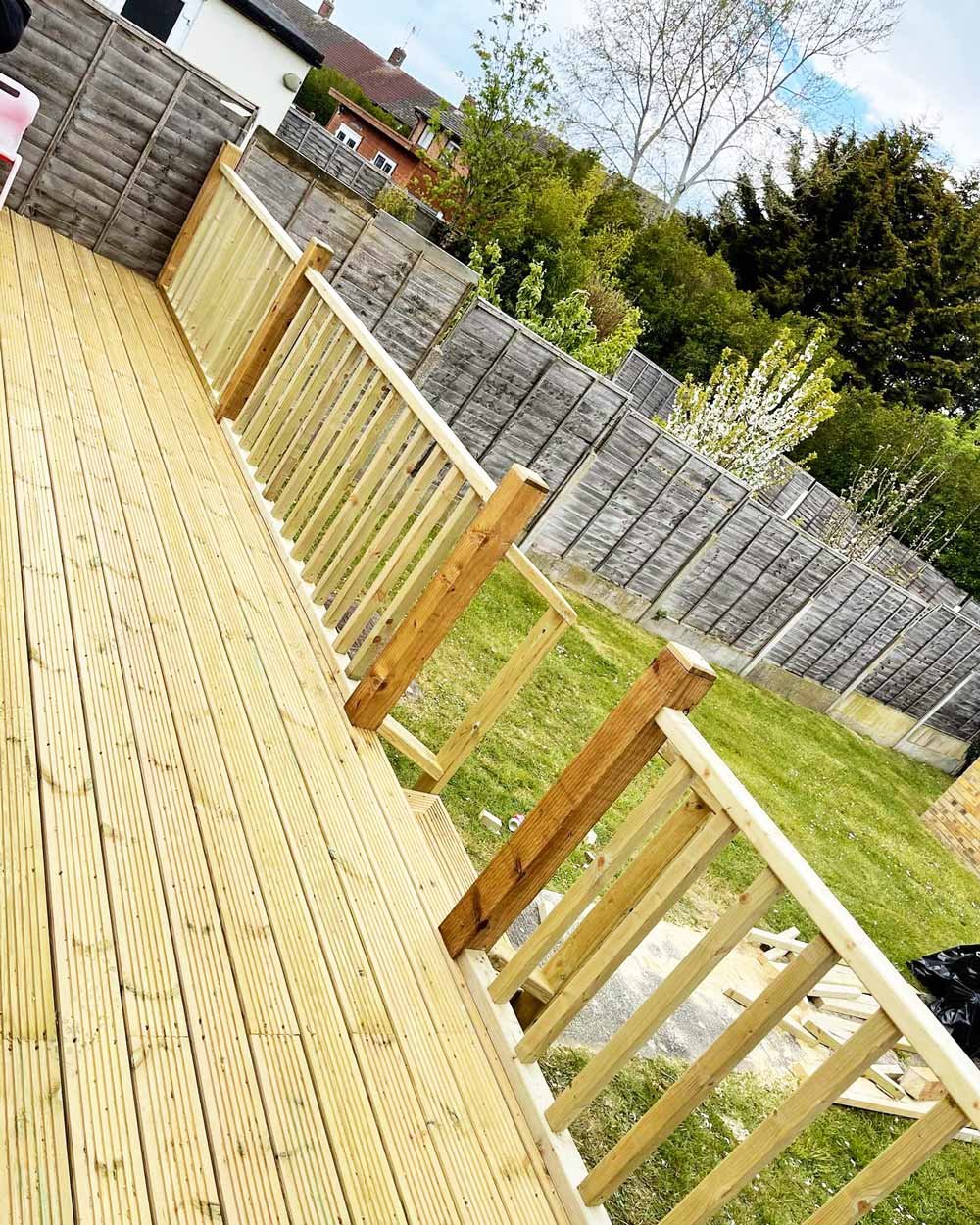
Most timber decks are pressure-treated softwood, usually pine, in smooth or grooved boards. Hardwoods such as balau and ipe are denser, longer lasting and more expensive. Timber is the cheaper option to install, it is easy to cut and shape around curves and steps, and it looks and feels like wood because it is.
- Needs cleaning and a coat of oil or stain every year or two to keep its colour and stop it greying and drying out.
- Grows algae in shade and becomes slippery in winter unless it is cleaned or fitted with grip strips.
- Cut ends and fixings are the weak points: untreated cuts and poor ventilation let rot start, usually at the joists rather than the boards.
- A well-built, well-maintained softwood deck lasts around 10 to 15 years; hardwood considerably longer.
Composite decking
Composite boards are made from wood fibre and recycled plastic, extruded into planks. Capped composite has a hard outer skin that resists stains and fading; uncapped is cheaper but can mark and lighten. Boards come solid or hollow, in grey, brown, charcoal and timber-effect finishes, with a reversible grooved or smooth face on many ranges.
- Almost no maintenance: a wash with soapy water once or twice a year.
- Does not rot, warp or splinter, and the colour of capped boards stays stable, so it suits families with children and anyone who will not oil a deck every summer.
- Costs more per board than softwood, so the same deck is more expensive up front, but it does not need the yearly treatment.
- Dark colours get hot in full sun, and boards expand and contract with heat, so the manufacturer’s gaps and joist spacing must be followed exactly.
- Heavier than timber and less forgiving of an uneven frame: the substructure has to be flat and at closer joist centres, typically 300 to 400 millimetres, than a timber deck.
The structure matters more than the boards
Nearly every deck that fails does so from underneath. Boards are easy to replace; a rotten or sinking frame means starting again. Whichever surface you choose, this is what should be under it:
- Posts set on concrete pads or ground screws, never straight into soil, so the frame can be levelled and does not sink.
- Treated timber joists, or an aluminium frame for composite, at the centres the boards require, with joist tape or protection on the top face where cut.
- A weed membrane and a layer of gravel below, and ventilation at the edges so the underside dries out.
- A slight fall away from the house so rain runs off rather than sitting on the boards.
- Where the deck meets the house, the finished surface should sit below the damp-proof course, and air bricks must not be covered.
- Stainless or coated screws and hidden clip systems for composite, so fixings do not stain the boards or work loose.
Planning permission and Building Regulations
Decking is usually permitted development if the surface is no more than 300 millimetres above ground level, it does not sit in front of the main elevation, and together with sheds and other outbuildings it covers no more than half the garden. A raised deck higher than that, a deck in a conservation area or at a flat or maisonette, or one that overlooks neighbours, normally needs planning permission. Any edge with a drop of more than 600 millimetres needs a balustrade, and steps need proper risers and going. We check the rules for your address before quoting and design the deck to stay within them wherever possible.
Making the most of it
- Levels and steps: a split-level deck handles a sloping garden and creates zones for dining and sitting.
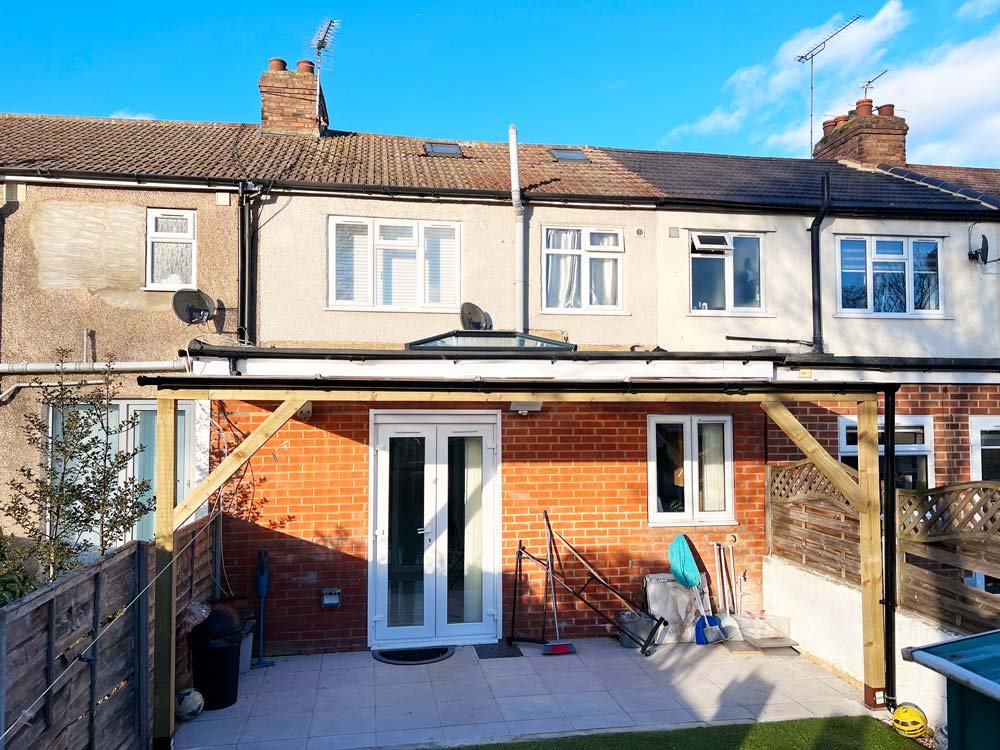
- A covered area: a pergola or polycarbonate roof over part of the deck means it is usable in a shower and shaded in July.
- Lighting: low-voltage deck lights and step lights run from an outdoor circuit, which our electricians fit with the deck.
- Balustrades and screens: glass, timber or aluminium, for safety on raised decks and privacy from neighbours.
- Integrated seating and planters, built into the frame rather than added on top.
How long does decking take?
A straightforward ground-level deck of 20 to 30 square metres usually takes three to five working days including the groundwork. A raised deck with steps, a balustrade and a covered area is typically one to two weeks. Composite takes slightly longer to fit than timber because of the closer joist spacing and clip fixings.
Which should you choose?
Choose timber if budget is tight, you like the natural look, you are happy to oil it every year or two, or the deck is a short-term fix before a bigger garden project. Choose composite if you want a deck that looks the same in ten years with a wash and nothing else, if the deck is in shade where timber would go green, or if children will be running on it barefoot. Either way, spend the money on the frame.
See what we build on our garden landscaping and decking page and look through finished gardens in the gallery.
Thinking about a deck?
We build timber and composite decking, steps, balustrades, covered areas and patios across Waltham Abbey, Cheshunt, Enfield, Chingford, Loughton, Epping and North and East London, with the groundwork and any electrics done by our own team. Call +44 20 3150 0510, email contact@adiorconstruction.co.uk or send us a message for a free garden visit and a fixed written quote.
Frequently asked questions
Is composite decking better than timber?
Composite is lower maintenance, does not rot or splinter and keeps its colour, but costs more to install. Timber is cheaper and looks natural but needs treating every year or two. Both last well on a properly built frame.
How long does composite decking last?
Capped composite boards typically last 25 years or more with only occasional washing. Softwood timber decking lasts around 10 to 15 years with regular maintenance.
Do I need planning permission for decking?
Usually not, if the deck is no more than 300 millimetres above ground, not in front of the main elevation and, with other outbuildings, covers no more than half the garden. Raised decks, flats and conservation areas often need permission.
Can composite decking be laid on an old timber frame?
Only if the frame is sound, level and at the joist centres the composite boards require, usually 300 to 400 millimetres. Most old frames need extra joists or replacing.
Does composite decking get hot?
Dark boards in full sun can get uncomfortably warm underfoot. Lighter colours and capped boards stay cooler. Timber also warms up but less so.
How long does it take to build a deck?
A ground-level deck of 20 to 30 square metres takes three to five working days. A raised deck with steps, balustrade and a covered area takes one to two weeks.