How Much Does a Media Wall Cost? 2026 Prices for Media Walls and Built-in TV Units
A media wall with us costs about £1,500 to £2,500 for a basic design: a stud wall built out from the existing wall, with a recess for the TV, plastered and painted. Adding an electric fire, shelving or lighting brings it to about £2,500 to £4,000, and a built-in TV unit with storage, made to measure by our carpenters, typically costs £2,000 to £4,500. These are guide prices from our own recent jobs across North and East London, Essex and Hertfordshire, and they include VAT. Every room is different, so we visit and give you a free written quote.
Media wall prices at a glance (2026)
| What you get | Typical price |
|---|---|
| Basic media wall: stud wall, TV recess, painted | £1,500 to £2,500 |
| Media wall with an electric fire, shelving or lighting | £2,500 to £4,000 |
| Built-in TV unit with storage | £2,000 to £4,500 |
Inside London the same work typically costs 10 to 20% more than in Essex or Hertfordshire. When you compare quotes, check whether the price includes the electric fire itself or only building it in, and whether mounting the TV and moving the sockets are included.
Media wall or built-in TV unit?
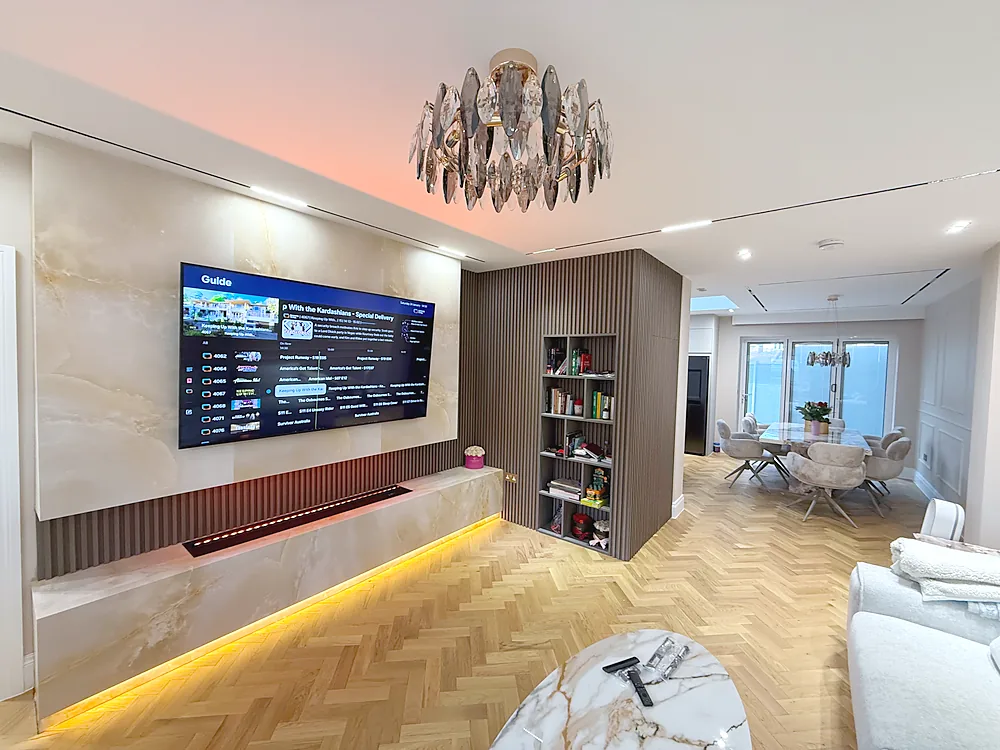
A media wall is a false wall built out in front of the existing one. It is framed in studwork, boarded with plasterboard, plastered and painted, and it gives a flat, built-in recess for the TV with every cable hidden inside. It is also the way to add an inset electric fire, lit alcoves and display shelves.
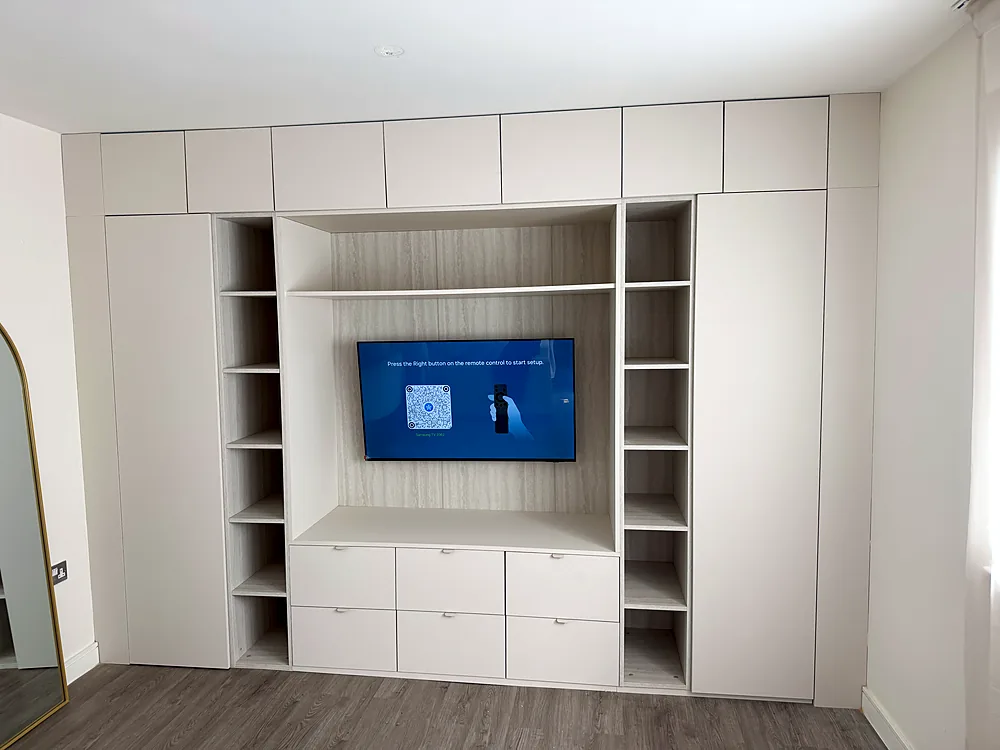
A built-in TV unit is a piece of carpentry: cupboards, drawers and open shelves made to the full width of the wall, often up to the ceiling, with the TV set into the middle. It gives far more storage, so it is the better choice where the room has to hold books, games and everything that would otherwise sit on the floor. Many of our jobs combine the two, with a plastered or panelled TV wall and fitted units either side.
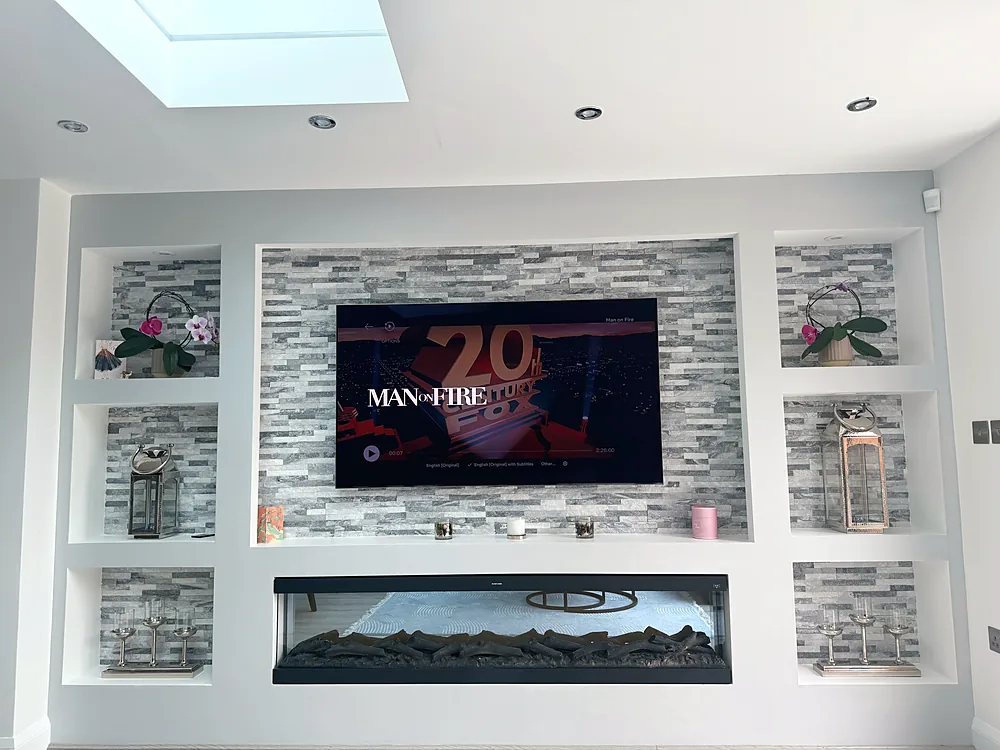
What each option includes and costs
Basic media wall: £1,500 to £2,500
The price covers the stud frame, the plasterboard, the recess for the TV, the plastering and the paint. Plasterboard alone will not hold a wall-mounted TV, so solid timber or plywood is built into the frame where the bracket goes. A cable route runs from the TV down to a lower shelf or recess for the TV box, games console or soundbar, so no wires show.
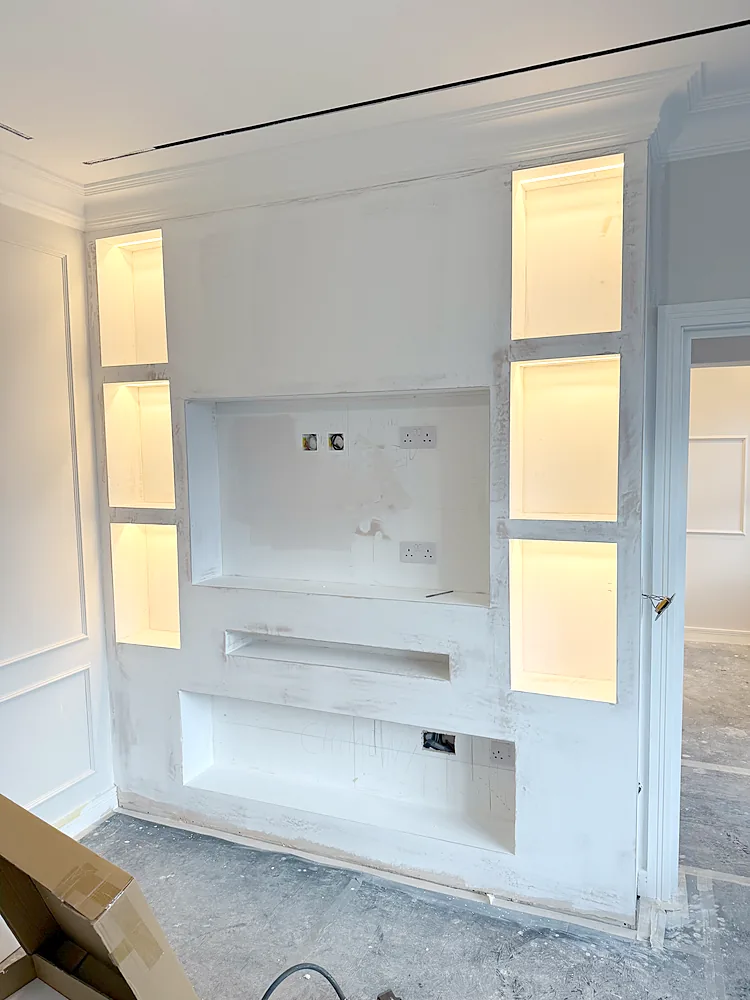
With an electric fire, shelving or lighting: £2,500 to £4,000
An inset electric fire sits in a recess below the TV, so the frame has to be deep enough for the firebox and built to the clearances in the fire maker’s installation instructions. Lit alcoves, LED strips under the shelves and a glow behind the TV are the other popular additions. Each LED strip runs from a small driver, which should sit somewhere it can be reached later rather than sealed inside the wall.
Choose the fire and the TV before the wall is built. The size of the fire sets the depth and the height of its recess, and the size of the TV sets the width of the wall and the position of the bracket and the sockets.
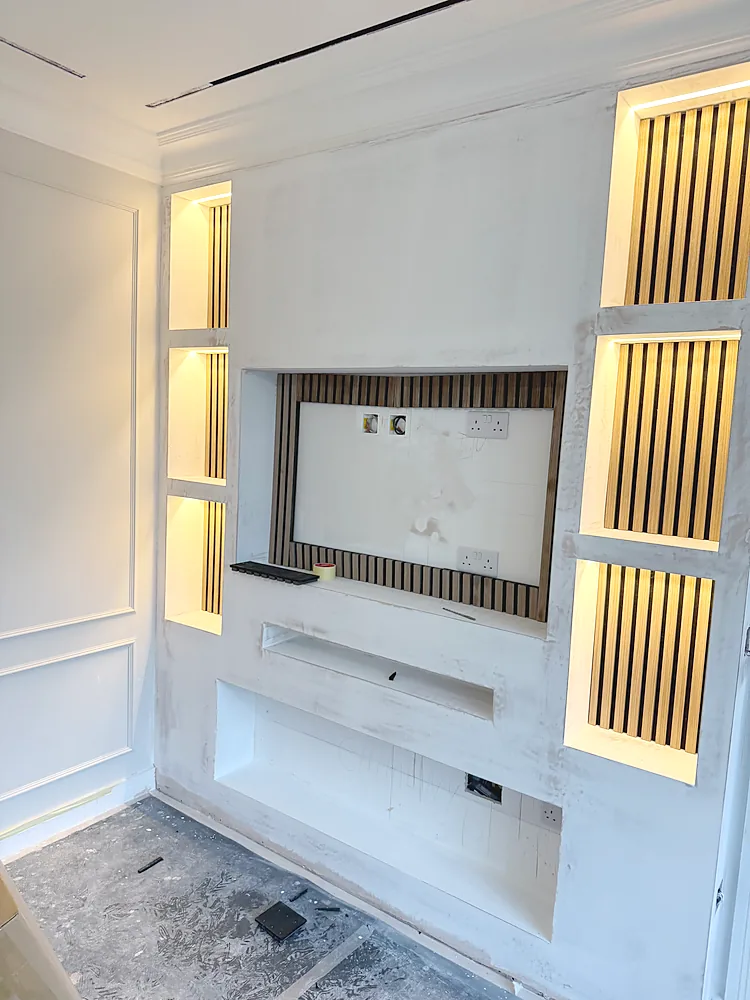
Built-in TV unit with storage: £2,000 to £4,500
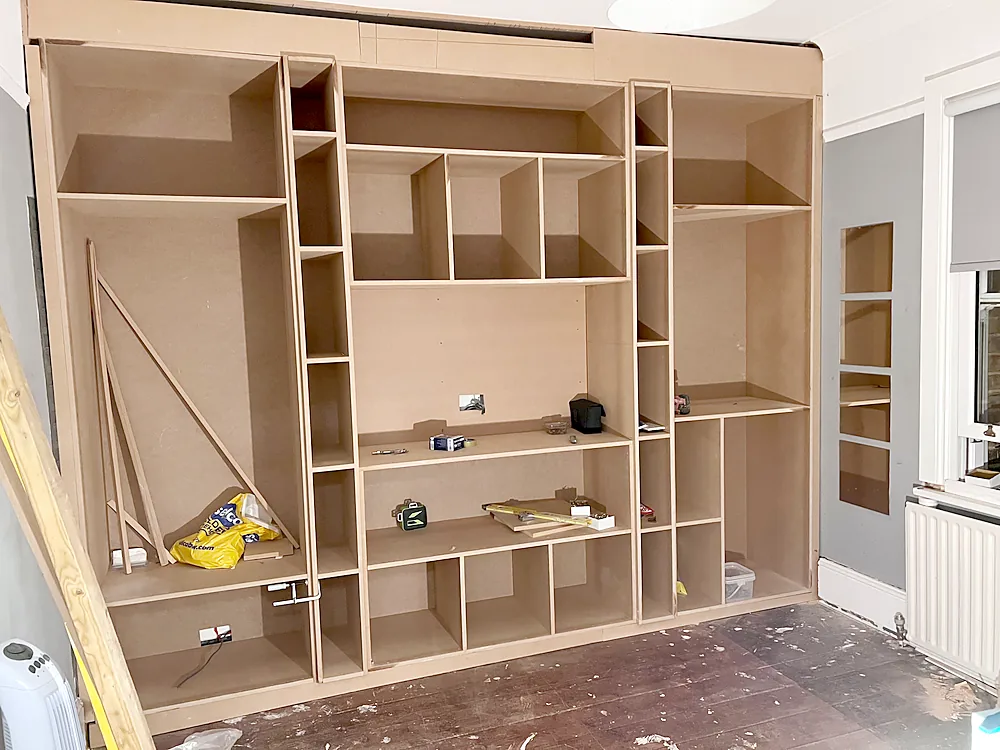
A built-in unit is made to measure from MDF, with cupboards, drawers and open shelving around a space for the TV. The price depends mostly on the width, whether it runs up to the ceiling, the number of doors and drawers, and the finish: painted or sprayed, shaker or flat doors, handles or push-to-open catches.
What pushes the price up or down
- Size. A media wall across the full width of the room, or one that runs up to the ceiling, uses more material and takes longer than a panel behind the TV.
- The fire. An inset electric fire needs a deeper frame and a power supply in the right place, and a wide fire needs a wider and deeper recess.
- Lighting. LED strips in the alcoves, under the shelves or behind the TV need drivers, switching and cable routes, all planned before the boards go on.
- Electrics. New sockets behind the TV and in the lower recess, a supply for the fire and the lighting circuits. The electrical work is done by our qualified electrician, and any work that is notifiable under the Building Regulations is tested and certified.
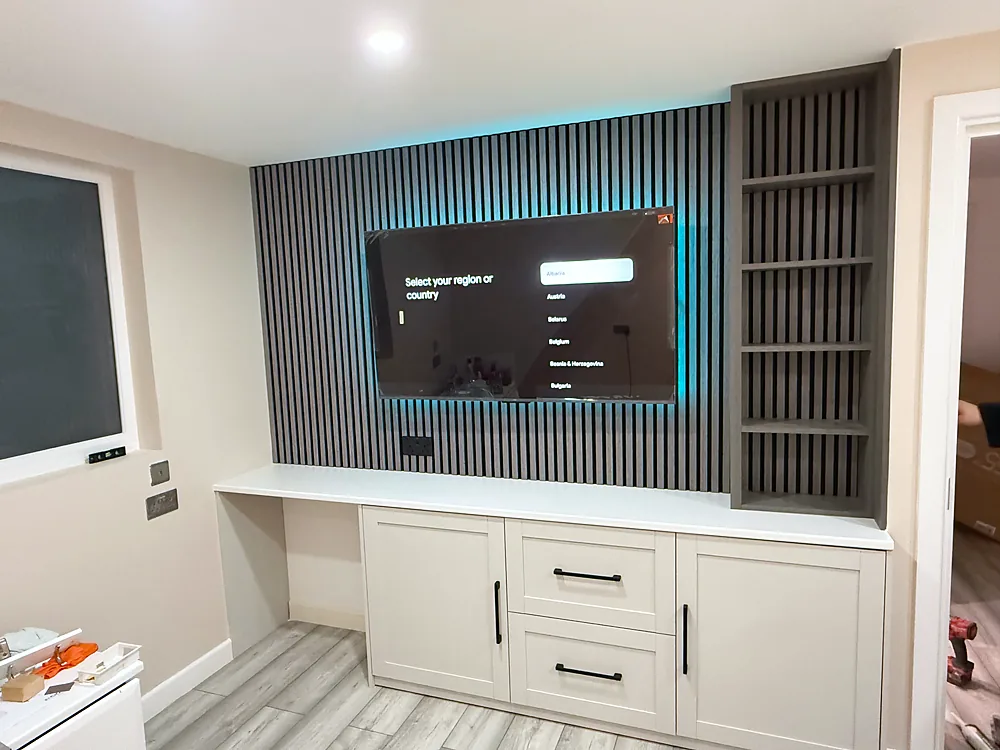
- Finishes. Paint is the cheapest finish. Slatted panels, split-face tiles, a marble-effect panel or sprayed doors on the units all add cost.
- Storage. Doors, drawers and soft-close runners cost more than open shelves.
- The existing wall. Damaged plaster around the media wall needs repairing first; our guide to skimming, replastering or dry lining explains the options.
- Where you live. Inside London the same work typically costs 10 to 20% more than in Essex or Hertfordshire.
Planning your media wall
- Measure the TV you have or plan to buy, and decide where you will sit. A TV is most comfortable to watch with the centre of the screen close to eye level from the sofa, and a fire underneath pushes it higher, so plan the two together.
- Decide where the TV box, games console and soundbar will live, and plan the cable route to them.
- Leave ventilation for any equipment that will sit inside a closed cupboard.
- Think about the depth. A media wall takes space from the room, so in a narrow living room keep the frame as shallow as the fire and the TV allow.
- Plan the lighting, the switches and the sockets at the start, not once the boards are on.
- Make sure the TV bracket and the LED drivers can be reached later without breaking into the wall.
Drying and decorating
Where the new wall is skimmed, the plaster has to dry fully before it is painted, which usually takes around 5 to 7 days depending on the thickness, the temperature and the ventilation. A mist coat goes on first to seal it, followed by the finishing coats. Our decorators paint the wall, the alcoves and the units as part of the same job.
Media walls with panelling and fitted furniture
A media wall often sits alongside wall panelling or fitted wardrobes, and designing them together means the lines and the panel spacing match. Our panelling and built-in TV wall project in Enfield combined panelling around the staircase with a fitted media wall, shelving and wardrobe storage built into the TV wall. Our guides to wall panelling and fitted wardrobes show how the rest of the room can follow.
Do you need planning permission for a media wall?
No. A media wall is internal work, so a house does not need planning permission for one. A listed building is the exception: internal changes to it need listed building consent.
How to keep the cost down
- Keep the media wall to the width the TV and the fire need, with paint as the finish.
- Choose a standard-size fire, and settle the model before the frame is built.
- Do the media wall together with any other carpentry or decorating in the same room, so the room is only disrupted once.
- Decide everything, including the lighting and the socket positions, before work starts. Changes once the boards are on cost the most.
See the full service on our carpentry and joinery page, and more finished work in our projects and gallery.
Planning a media wall?
Our carpenters design and build media walls, built-in TV units, alcove units and wall panelling across Waltham Abbey, Cheshunt, Enfield, Chingford, Loughton, Epping and North and East London. Call +44 20 3150 0510, email contact@adiorconstruction.co.uk or send us a message to book a free survey and a written quote.
Frequently asked questions
How much does a media wall cost in 2026?
With us, a basic media wall with a TV recess, plastered and painted, typically costs £1,500 to £2,500, including VAT. With an electric fire, shelving or lighting it is typically £2,500 to £4,000. Inside London the same work typically costs 10 to 20% more than in Essex or Hertfordshire.
How much does a media wall with an electric fire cost?
A media wall with an electric fire, shelving or lighting typically costs £2,500 to £4,000 with us. Check whether a quote includes the fire itself or only building it in.
How much does a built-in TV unit cost?
A built-in TV unit with storage typically costs £2,000 to £4,500 with us. The width, the height, the number of doors and drawers and the finish set the price.
Can you put a TV above an electric fire?
Yes, it is one of the most popular designs. The recess and the clearances above the fire must follow the fire maker’s instructions, and the fire raises the TV, so check the viewing height from the sofa.
Can a media wall hold a heavy TV?
Yes, when it is built for it. Solid timber or plywood is built into the frame where the bracket goes, because plasterboard alone will not hold a wall-mounted TV.
Do I need planning permission for a media wall?
No. A media wall is internal work and a house does not need planning permission for it. A listed building needs listed building consent for internal changes.